
How to Know When to Harvest Cannabis?
Learn how to read trichome color and maturity to choose a harvest window that matches your desired flower quality and effect.

Harvest timing is one of the decisions that most strongly shapes the finished flower. A plant can look mature from a distance while the resin glands are still developing under magnification.
The most useful visual signal is the condition of the trichomes on the flowers. Trichomes are the small resin glands that hold much of the plant's cannabinoids and aromatic compounds. Their appearance can help you choose a harvest window with more confidence.
Trichome color is a practical guide, not a laboratory test. Genetics, drying, curing, and storage also affect the final aroma and effect.
Why Trichomes Matter at Harvest
Trichomes begin as clear, glass-like glands. As the flower matures, they often become cloudy or milky, and some later turn amber. This change reflects the development and aging of the resin head, but the exact pace varies by cultivar and growing conditions.
Pistil color, calyx swelling, and overall flower maturity are useful supporting signals. They should be used alongside trichome inspection rather than replacing it.
When to Start Checking Trichomes
Begin regular checks when the plant is approaching the expected flowering time for its cultivar and the flowers have stopped making obvious new growth. In practice, many growers start with a quick inspection one to two weeks before the estimated harvest window.
- Check the flowers every few days as the plant approaches maturity
- Inspect more than one flower and more than one side of the plant
- Record what you see so a single unusual flower does not decide the harvest
- Use the same light and magnification when comparing checks
How to Inspect Trichomes Correctly
A jeweler's loupe or a phone-compatible macro lens can work for a first check. A small digital microscope gives a clearer view when the difference between cloudy and amber is difficult to see.
Inspect the resin glands on the flower itself, especially the upper and middle calyxes. Sugar leaves often mature sooner than the flowers and can make the plant appear ready too early.
- Turn off strong grow lights or use a neutral inspection light
- Choose several representative flowers at different heights
- Focus on the heads of the trichomes, not only the stalks
- Compare the overall pattern instead of counting a few isolated glands
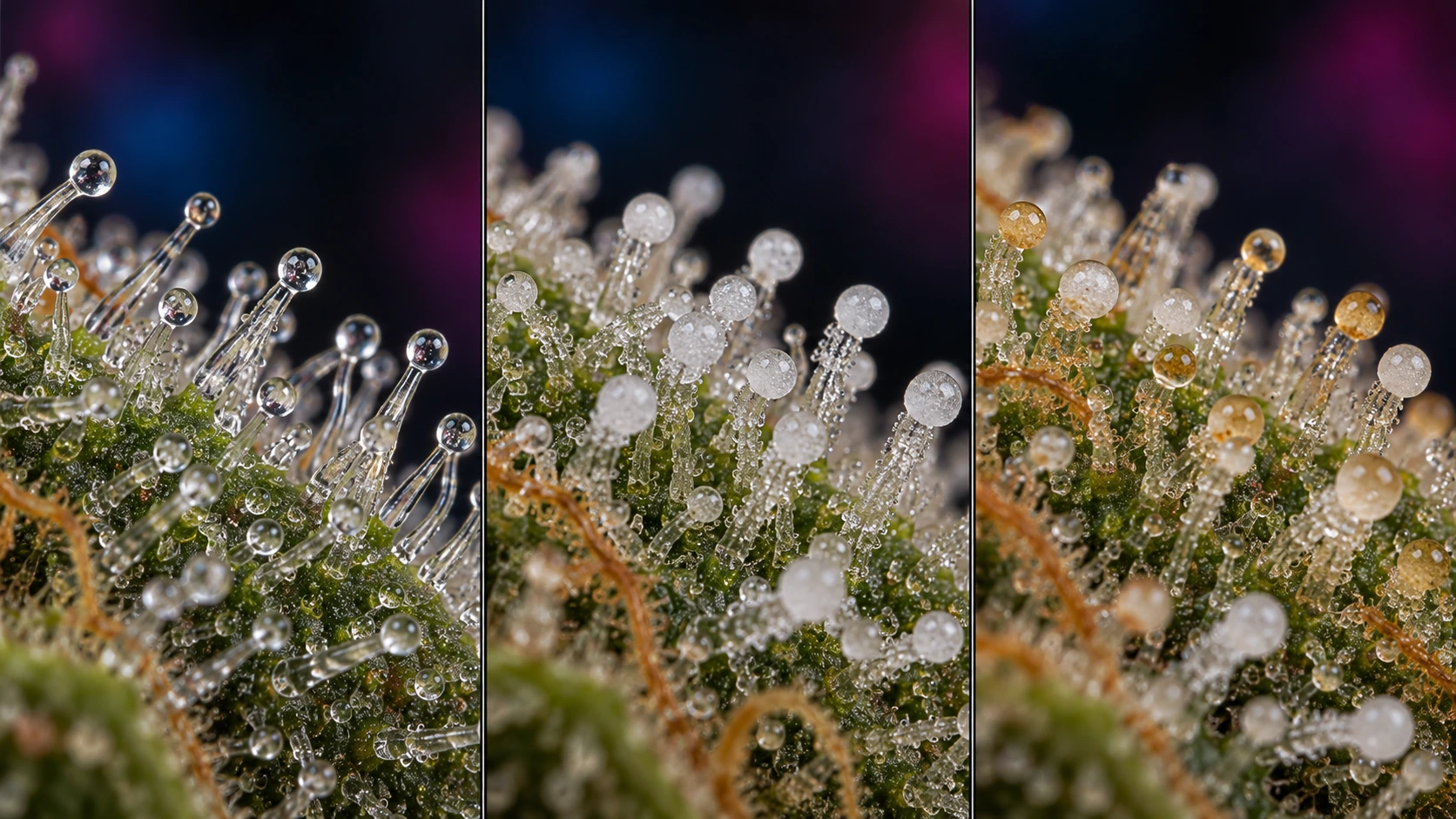
Clear Trichomes: Usually Too Early
Clear trichomes look transparent and reflect light like small glass beads. When most of the glands are clear, the flower is usually still building its final resin profile.
Harvesting at this point can produce lighter aroma development and a less complete flower profile. Some growers intentionally choose a small early sample, but a whole-plant harvest at this stage is often premature.
Cloudy Trichomes: The Main Harvest Window
Cloudy or milky trichomes look opaque rather than transparent. This stage is the main harvest window for many growers because the flowers have reached strong resin development while the profile is still fresh and lively.
A common target is mostly cloudy trichomes with a small amount of amber. The exact balance depends on the cultivar and the effect the grower wants, so the visual target should be treated as a range rather than a fixed rule.
Amber Trichomes: A Later Harvest Window
Amber trichomes have begun to change from milky white to gold or honey. A few amber glands can be part of a normal harvest window. A large proportion of amber glands indicates that the plant has moved further into maturity.
Later harvests are often chosen by growers who prefer a heavier, more settled experience. This is not a guaranteed effect, because cultivar chemistry and the curing process have a major influence on the result.
Reading the Three Trichome Stages
Use the pattern across several flowers
Mostly clear
The resin is still developing. Wait and check again unless you have a specific reason to harvest early.
Mostly cloudy
A strong general harvest window for many cultivars. Look for a small amount of amber if that matches your preference.
Cloudy with more amber
A later window with more mature resin. Watch for signs that the plant is moving past its best balance.
What Can Happen With an Early Harvest?
An early harvest means cutting while many trichomes are still clear. The flowers may have less developed aroma, a lighter body of resin, and a less rounded experience after curing. Yield can also be lower because the final swelling stage has not finished.
Early harvesting can still be appropriate when a plant has a serious health problem, environmental risk, or a rapidly worsening root or flower issue. In that situation, preserving the crop can matter more than waiting for a perfect trichome ratio.
What Can Happen With a Late Harvest?
A late harvest means allowing a larger share of the trichomes to turn amber. The experience may feel heavier or more relaxing to some consumers, but this outcome is not automatic and should not be treated as a medical claim.
Waiting too long can also reduce the fresh aroma profile and allow more resin degradation. Mold, pests, light stress, and environmental problems are practical reasons to act before the plant passes its best harvest window.
The words energetic and relaxing describe common grower observations, not guaranteed effects. Individual response, cultivar chemistry, dose, and curing all matter.
Choosing Your Best Harvest Window
For a balanced result, many growers aim for mostly cloudy trichomes with a small percentage of amber. A grower seeking the freshest, brightest profile may harvest with very little amber. A grower seeking a later, heavier profile may wait for more amber.
The best target is the one that matches your cultivar, your growing notes, and your intended result. Take photographs through the loupe or microscope, and use those records to improve the next cycle.
Final Harvest Checklist
- Most flower trichomes are in the maturity range you chose
- You checked several flowers, not only sugar leaves
- The plant has no active mold or pest problem being ignored
- The harvest space is clean, dry, and ready
- You have recorded the trichome pattern for the next grow
Conclusion
The right harvest time is a window, not a single perfect day. Inspect the trichomes on the flowers, compare the pattern across the plant, and decide whether a clear, mostly cloudy, or more amber profile fits your goal.
With consistent checks and careful notes, trichomes become a practical decision tool. They help you harvest with intention and build a more repeatable result from one RootBox Hydro cycle to the next.
Subscribe
Get new grow guides by email
Join the RootBox Hydro email list for practical cultivation guides, product notes, discounts and updates.